 English
 中文简体
中文简体
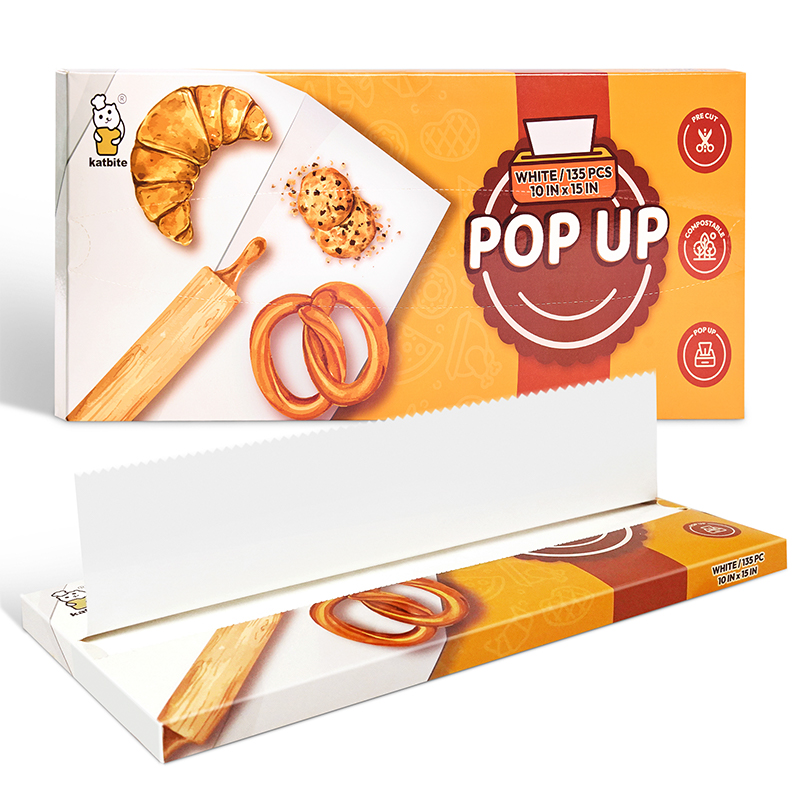
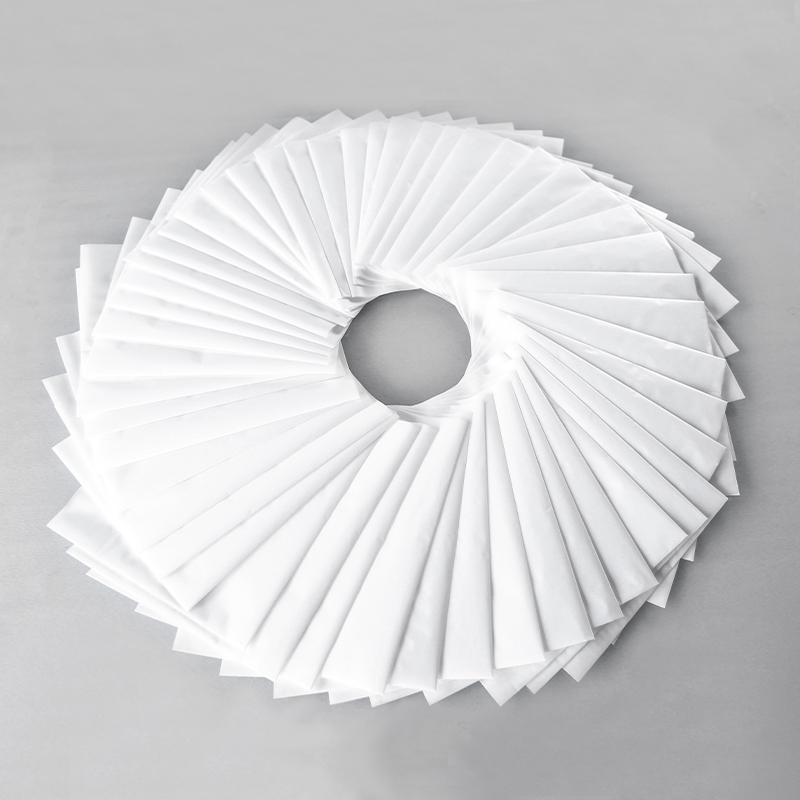
Product details: Pop-up parchment paper sheets, an environment-friendly product, are composed of wood pulp and are double-side coated with silicone. Such a coating makes our paper smooth, greasepr...
See DetailsHow Does Greaseproof Paper Support Takeaway Packaging
Anyone who's carried a bag of fried chicken home and watched a grease spot spread across the bottom of the paper bag has seen the exact problem Food Greaseproof Paper is meant to solve. A hamburger wrapper gets soggy from meat juices, a fried snack leaves oily marks on the inside of its box, and a sandwich made an hour ago starts feeling damp by lunchtime. For food businesses, greaseproof paper offers a practical way to put a cleaner barrier between the food and its packaging, without turning the customer's unboxing experience into a mess.
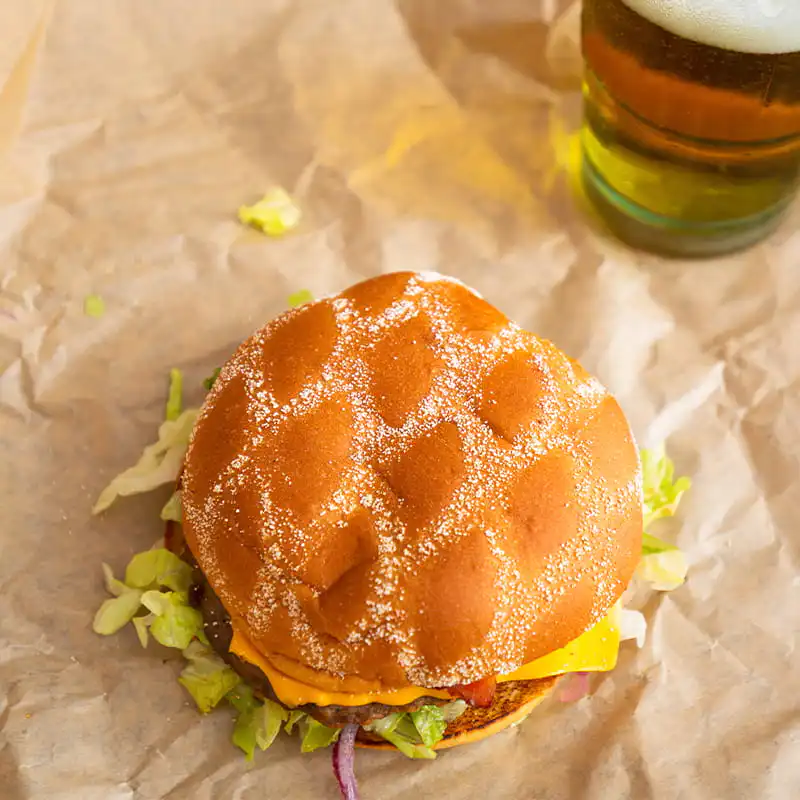
Matching the paper to the food still takes some thought. A paper that works fine wrapped around a dry pastry doesn't necessarily behave the same way pressed against hot, oily fried chicken or a sandwich loaded with sauce. Packaging format, what the food actually contains, how it's handled after packing, and how it's meant to look when it reaches the customer all factor into which paper makes sense.
Grease-resistant paper ends up playing a bigger role than just "wrapping material" once you look at it this way — it becomes part of how food gets prepared, boxed, carried, and finally handed over to a customer.
Why Takeaway Food Needs Grease-Resistant Paper in the First Place
Takeaway meals are full of ingredients that interact directly with whatever's wrapped around them. Cooking oil from a fryer, melted butter, sauce dripping off a sandwich, natural moisture released from vegetables — all of it can migrate into ordinary paper during the short window between packing and eating.
When regular paper absorbs moisture and grease too quickly, the effects can become obvious soon after. The package may look stained before the customer opens it, feel unpleasant to hold, and lose its shape when it needs to stay intact. Nobody wants a soggy bag to tear open on the way home.
Greaseproof paper is designed to resist this type of absorption, making it suitable for direct food contact in packaging applications where moisture and grease resistance are important.
- Grease management — cuts down on oil soaking through to the outer packaging
- Food separation — keeps one food item from sitting directly against another surface it might stain
- Wrapping — holds an individual portion together, like a single burger or sandwich
- Lining — adds a protective layer inside a box or tray before food goes in
- Presentation — keeps the packaging looking clean enough that the food still looks appetizing when it's opened
How well any of this works depends on the specific paper construction and what's actually being packaged. A place serving burgers, fried snacks, sandwiches, and pastries off the same menu is realistically dealing with several different packaging behaviors, not one uniform challenge — which is why treating every item the same way at the packing station rarely works out well.
How It Works for Hamburger Packaging
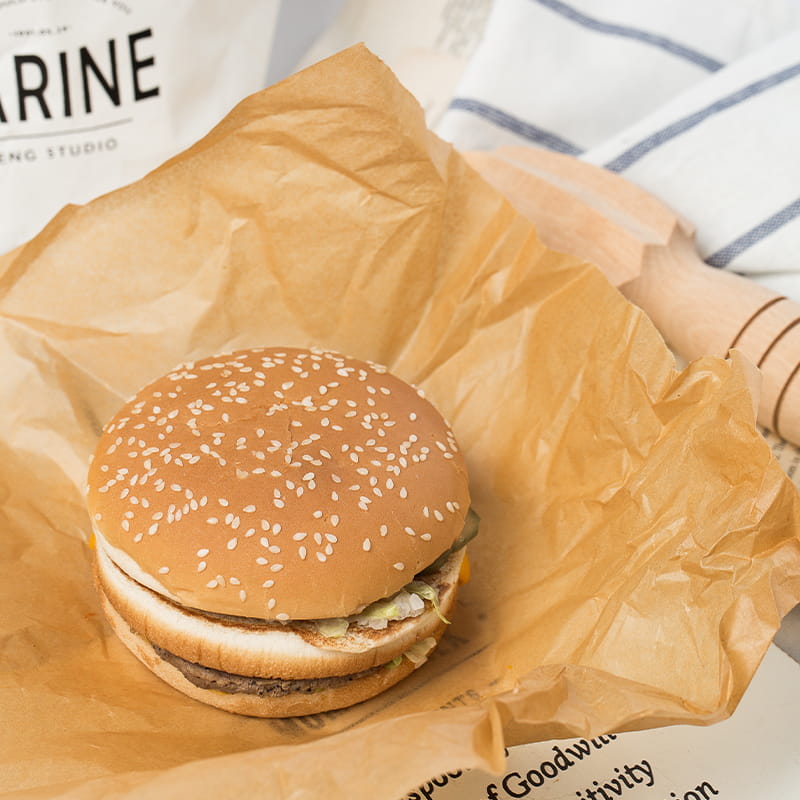
A hamburger throws several packaging problems at once. There's meat juice, maybe a sauce or two, melted cheese, vegetables, and cooking oil from the grill — and the whole thing is often still warm when it gets wrapped.
The wrapper has to hold the burger together while cutting down on how much of that grease actually reaches the outer surface.
Greaseproof paper shows up here in a few different forms:
Wrapped hamburgers — a paper wrapper keeps the burger from falling apart while giving the customer something reasonably clean to hold, putting a layer between the food and their hands.
Burger boxes — a paper liner inside the box separates the burger from the box material directly, which matters more when the burger's dripping sauce or oil.
Serving trays — for counter service or dine-in, a simple paper sheet under the burger gives a food-contact layer while keeping the tray looking presentable between orders.
Which format makes sense depends on how wet the burger actually is. A burger loaded with barbecue sauce and melted cheese calls for more coverage than a simpler, drier sandwich-style burger.
The folding and placement matter here too — if the paper's folded too tight around the burger or doesn't cover the areas actually touching the filling, grease finds its way to the surrounding packaging anyway, wrapper or no wrapper.
Can It Handle Fried Food Packaging?
Fried food is a familiar use for grease-resistant paper. French fries, fried chicken, onion rings, and similar foods release oil after they leave the fryer, and that oil does not simply stay in one place — it spreads.
The problem gets more noticeable when hot food goes straight into paper packaging. As the food sits, oil and steam both work their way toward the packaging surface, and a paper that can't handle that starts showing grease spots within minutes.
Common formats for this include:
- Fry bags
- Food trays
- Paper pouches
- Basket liners
- Takeaway boxes
- Wrapping sheets
Different fried foods call for different approaches. French fries usually go into an open or partly open container, where a paper liner separates the fries from the container itself while keeping that casual, scoop-and-eat serving style intact.
Fried chicken tends to need broader coverage just because of its shape and how much surface oil clings to it — a sheet or liner wrapped around the pieces helps with handling without the customer's hands ending up covered in oil.
Smaller fried snacks — think fried dumplings or tempura pieces — often go into pouches or small paper bags, where the paper has to resist grease while still being easy to tear open one-handed.
Temperature, how much oil the food actually released, how long it sits before someone eats it, and the shape of the packaging all play into how well any given paper performs. A packaging supplier and a food business are better off working through the actual use case together rather than picking paper off a generic "greaseproof" label.
How Greaseproof Paper Fits Sandwich Packaging
Sandwiches look simpler to package than fried food, but they come with their own set of problems. Mayonnaise, cheese, sauce, vegetables, and cooked meat can all release moisture or oil while the sandwich sits waiting to be picked up.
Paper works here either as an individual wrap around the whole sandwich or as an inner layer tucked inside a larger box.
A properly planned sandwich wrap handles a few practical jobs at once:
- Wrapping keeps the sandwich from falling apart in transit
- Separation limits how much filling actually touches the outer packaging
- Handling gives the customer a cleaner surface to hold onto while eating
- Presentation keeps things looking tidy rather than smeared
- Portioning works well for sandwiches cut into individual pieces
How the paper is folded matters just as much as the paper itself — it needs to cover the areas likely to touch the filling, rather than simply wrapping around the outside.
For sandwiches made ahead of time and held for a while before pickup, it's worth thinking through how long that wrap needs to hold up. Moisture seeping out of lettuce or tomato behaves differently over time than oil from bacon or dressing does.
A sandwich shop juggling several menu items might reasonably use different paper for different sandwiches — a grilled cheese with melted filling doesn't need the same treatment as a cold veggie wrap sitting in a fridge case. Matching the paper to the actual sandwich cuts down on wasted material while still giving each one the protection it needs.
What Role It Plays in Baked Goods Packaging
Baked goods run a wide range — from a dry dinner roll to a cream-filled pastry that's basically dripping with butter. Bread, cookies, muffins, and pastries all get wrapped or separated with food-safe paper depending on what's inside them.
Grease resistance isn't always the main point here. Sometimes the paper's job is just keeping the food from sticking directly to a tray or box surface.
A pastry with a buttery filling benefits from a paper layer inside its box. A bakery displaying cookies or pastries might use individual sheets just to keep products from touching each other during display or when they're bagged for takeaway.
Pastries — paper separates them from trays or boxes and gives a clean surface for handing over at the counter.
Cookies — individual sheets between pieces cut down on them sticking together or leaving marks on each other.
Muffins — a liner or wrap helps with both handling and how they look sitting in a display case.
Filled baked goods — anything with cream, butter, or chocolate filling generally needs more careful paper selection, since these fillings tend to soften and spread with any warmth.
Appearance matters a lot here specifically because a stained box or bag makes a pastry look less appealing even when the food inside is perfectly fine to eat. A clean paper layer helps on both fronts — practical handling and how the product actually looks when the customer opens the box.
Using Greaseproof Paper as a Lunchbox Lining
A lunchbox-style meal often has several different foods sitting in one container at once — maybe fried chicken next to rice, a bit of salad, and a small dessert. A paper lining creates separation between the food and the container itself, and between the food items sitting next to each other.
This matters a lot for combo-style takeaway meals where an oily main dish sits right beside something drier, like vegetables or rice, that would otherwise soak up whatever grease is nearby.
Practical uses here include:
- Lining the whole meal box
- Separating fried items from other components in the same container
- Creating rough sections within the box for different foods
- Making the box easier to clean out or dispose of after eating
- Giving specific items their own food-contact surface within a shared container
Size and folding matter quite a bit — a sheet that's too small won't cover what it needs to, while an oversized sheet just gets in the way during packing and makes the whole process slower for kitchen staff.
Moisture is worth thinking through separately from grease here too. A meal with sauce-heavy components behaves differently inside the box than a mostly dry combination would, and the paper choice should reflect that.
Matching Paper to Different Takeaway Foods
There's no real need to use the same paper across an entire menu. Splitting packaging choices up by food type and how it's served tends to work better in practice.
| Food Application | Packaging Approach |
|---|---|
| Hamburger | Wrapper, box liner, or tray liner |
| Fried food | Bag, pouch, tray liner, or wrapping sheet |
| Sandwich | Individual wrap or inner liner |
| Baked goods | Sheet, liner, or individual wrapping |
| Lunchbox meals | Container lining or food separation |
| Snacks | Small pouch or serving sheet |
Thinking about it this way makes purchasing decisions a lot more grounded. A business should weigh how oily the food is, how much moisture it carries, whether it's served hot, how customers will actually handle it, and how the packaging itself is put together.
For a restaurant running a mixed menu, it usually makes sense to stock a small handful of paper formats rather than trying to stretch one sheet type across every item on the menu. That keeps packing simple for staff while still giving each food category the kind of protection it actually needs.
What to Check When Selecting Greaseproof Paper
The paper itself is just one piece of a working takeaway packaging setup. It's worth thinking through the whole path — from the moment food gets packed to the moment a customer opens it.
What food will actually touch the paper? Oil, moisture, sauce, and dry ingredients each create a different set of demands.
How will the paper get used? Wrapping, lining, folding into a pouch — each of these calls for a different format or weight of paper.
Will the food be warm when it's packed? Heat changes how oil and moisture move through the paper.
How will customers actually handle it? A wrapper needs to hold up while being carried, opened, and eaten from directly.
Does appearance matter at the point of service? Packaging is part of what a customer sees before they even taste the food — a clean, tidy wrap or box contributes to how the whole meal comes across.
Does it fit the equipment and process already in place? Paper size and format need to work with whatever folding or bagging process the kitchen already runs.
Is it actually suited for direct food contact in this application? Food packaging materials should meet relevant food-contact standards and match what the supplier states the product is meant for.
Working through these questions helps buyers avoid picking paper based on a vague "greaseproof" label without checking whether it actually fits the specific food going into it.
How Greaseproof Paper Supports More Flexible Takeaway Packaging
Takeaway businesses increasingly run menus that mix burgers, fried snacks, sandwiches, pastries, and full combo meals all under one roof. That variety calls for packaging materials flexible enough to take on several different roles, instead of forcing every item through the same wrapping process.
Greaseproof paper fits into that mix as a wrapper, a liner, a separator, pouch material, or a simple serving sheet — how useful it ends up being comes down to how closely the specific format matches the food and the container it's going into.
The rest of the packaging design plays into this too. How the paper's folded, the shape of the box or bag, where the food actually sits inside it, and how customers are expected to open and eat from it — all of these change how well the paper actually performs in practice.
For packaging buyers, that points toward starting the selection process with the meal itself rather than flipping through a product catalog first. Once it's clear where the grease, moisture, heat, and direct contact are actually happening in a given dish, picking a paper format that fits gets a lot more straightforward.
Related Products
-
-
Product details: Folded baking paper sheets, an environment-friendly product, are composed of wood pulp and are double-side coated with silicone. Such a coating makes our paper smooth, greaseproof and...
See Details -
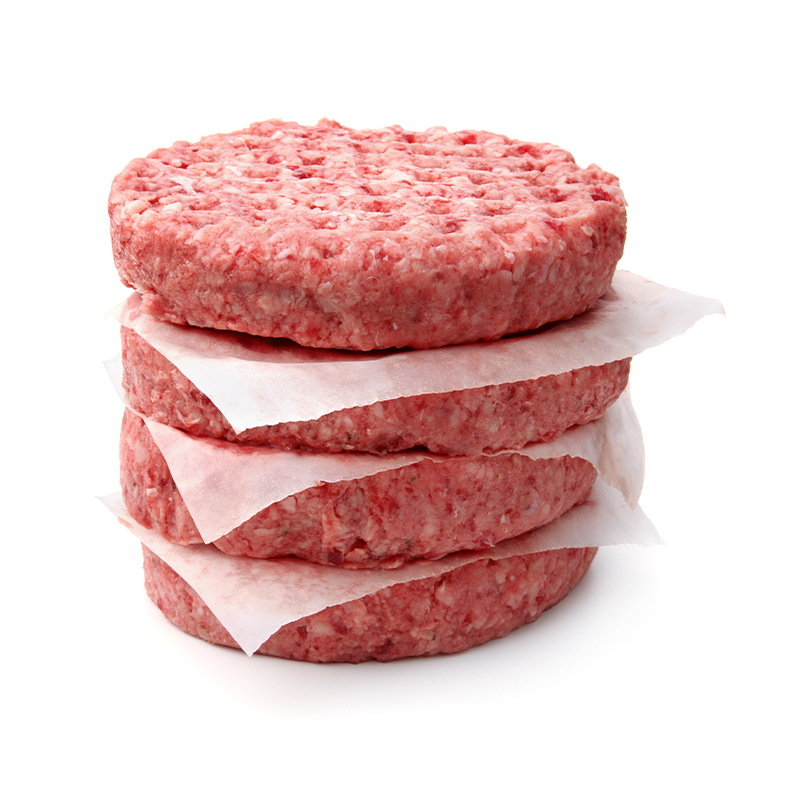
Description: Wax paper is the paper that is coated with food-grade wax in order to make it non-stick and waterproof. wax paper is very good for food storing and presentingMade of food-grade paper and ...
See Details -
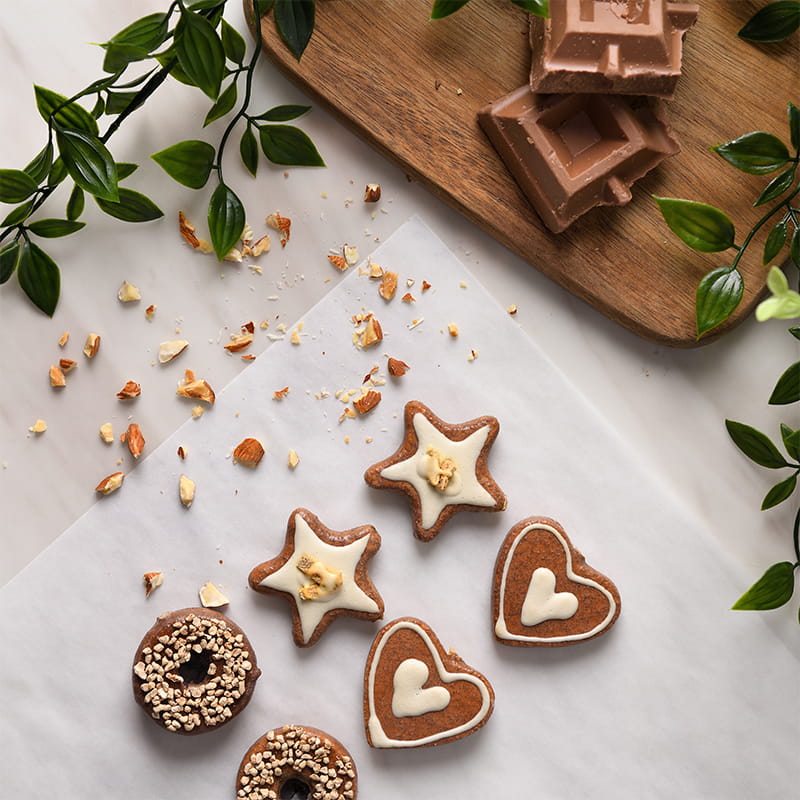
Product Features: 1. Virgin wood pulp 2. Double sides food grade silicone-treated 3. Fluorine-free 4. Non-stick 5. Oven/Microwave safe 6. Freezer safe 7. Reusable 8. BPA f...
See Details -
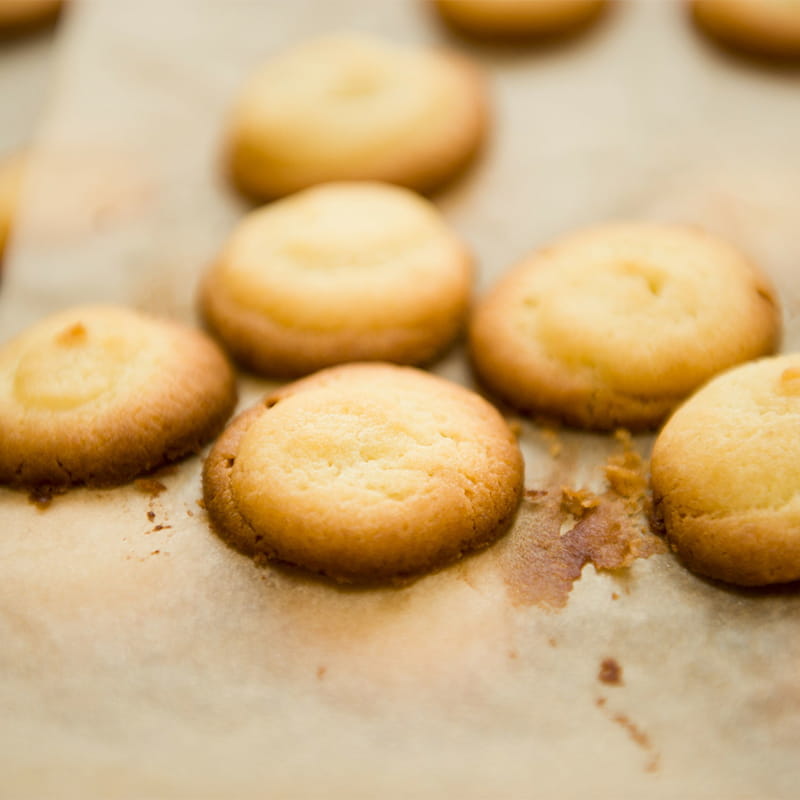
Product Features: 1. Virgin wood pulp 2. Natural unbleached brown color 3. Double sides food grade silicone-treated 4. Fluorine-free 5. Non-stick 6. Oven/Microwave safe 7. Fre...
See Details -
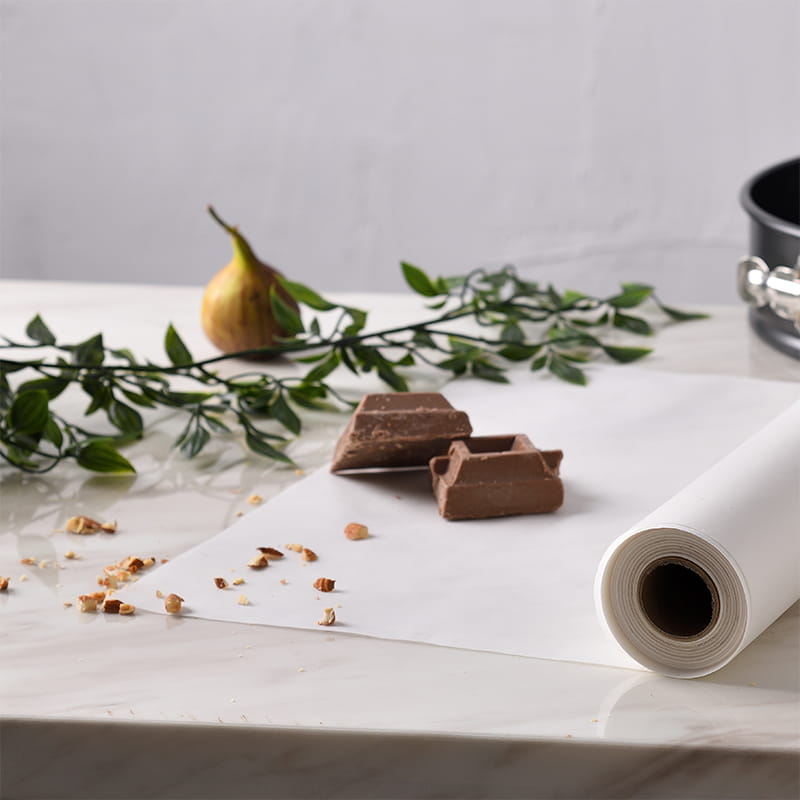
Product Features: 1. Virgin wood pulp 2. Double sides food grade silicone treated 3. Fluorine-free 4. Non-stick 5. Oven/Microwave safe 6. Freezer safe 7. Reusable 8. BPA ...
See Details -
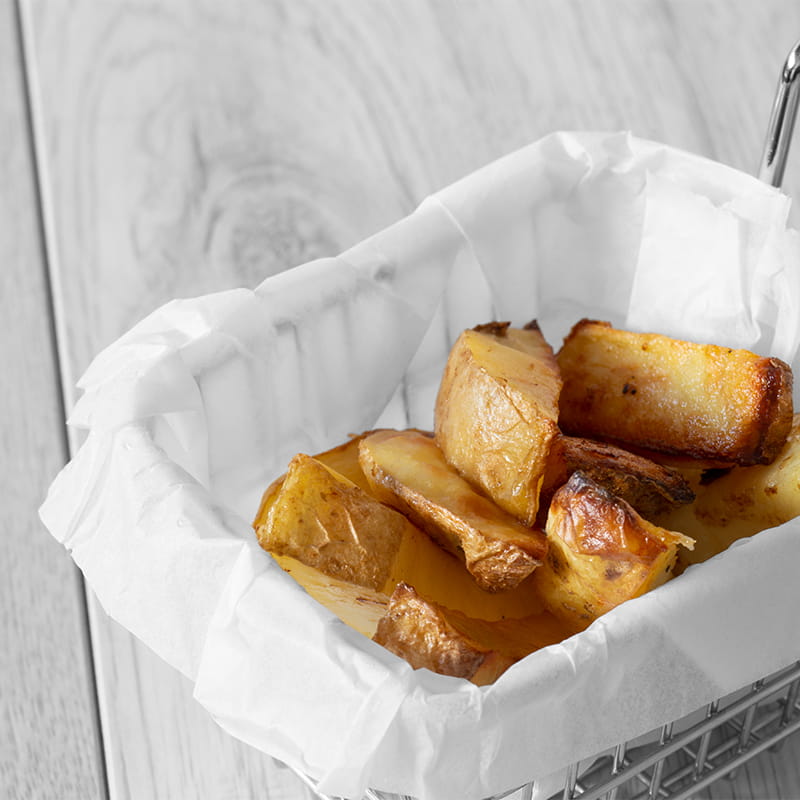
Product Features: 1. Virgin wood pulp 2. Fluorine-free 3. BPA free 4. Biodegradable Product Details: In an era where environmental consciousness and sustainability are paramount, Natu...
See Details -
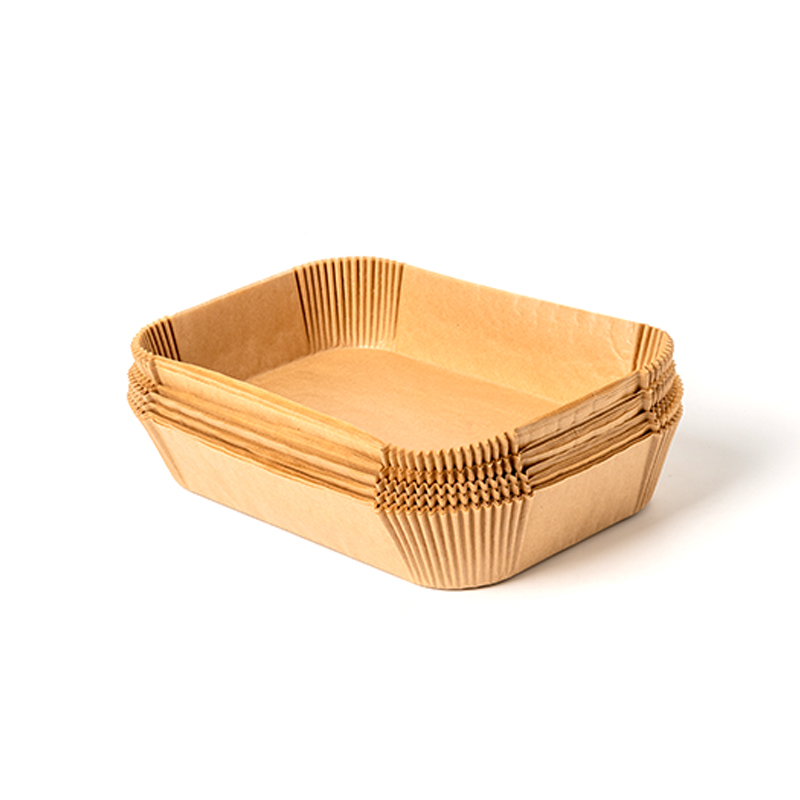
Product Features: 1. Virgin wood pulp 2. Double sides food grade silicone-treated 3. Fluorine-free 4. Non-stick 5. Air fryer basket safe 6. Reusable 7. BPA free 8. Biodeg...
See Details -
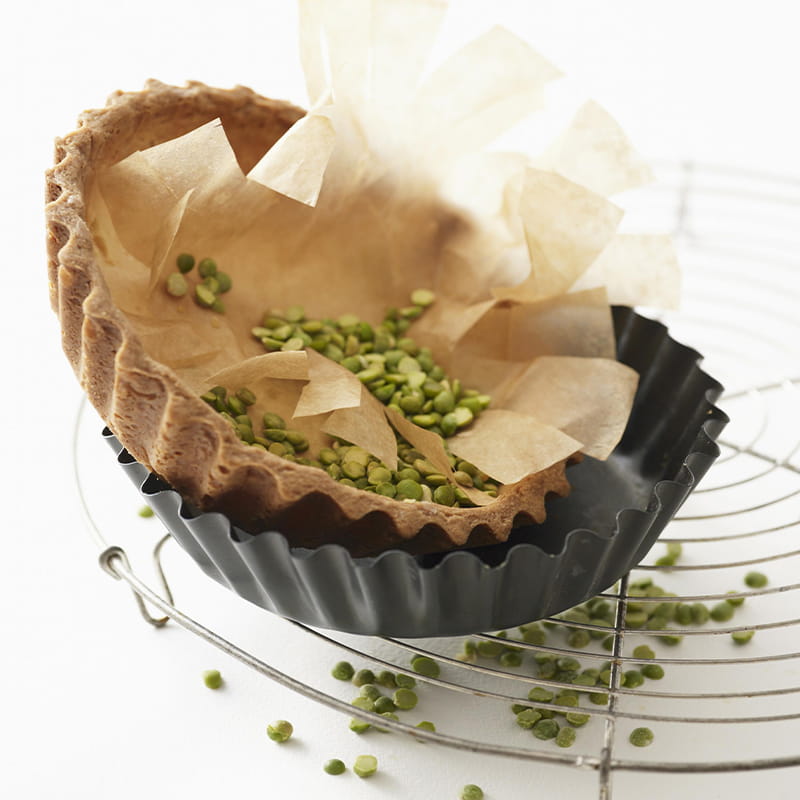
Product Features: 1. Virgin wood pulp 2. Natural unbleached brown color 3. Fluorine-free 4. BPA free 5. Biodegradable Product Details: Introducing our Unbleached Brown Food Grade ...
See Details -
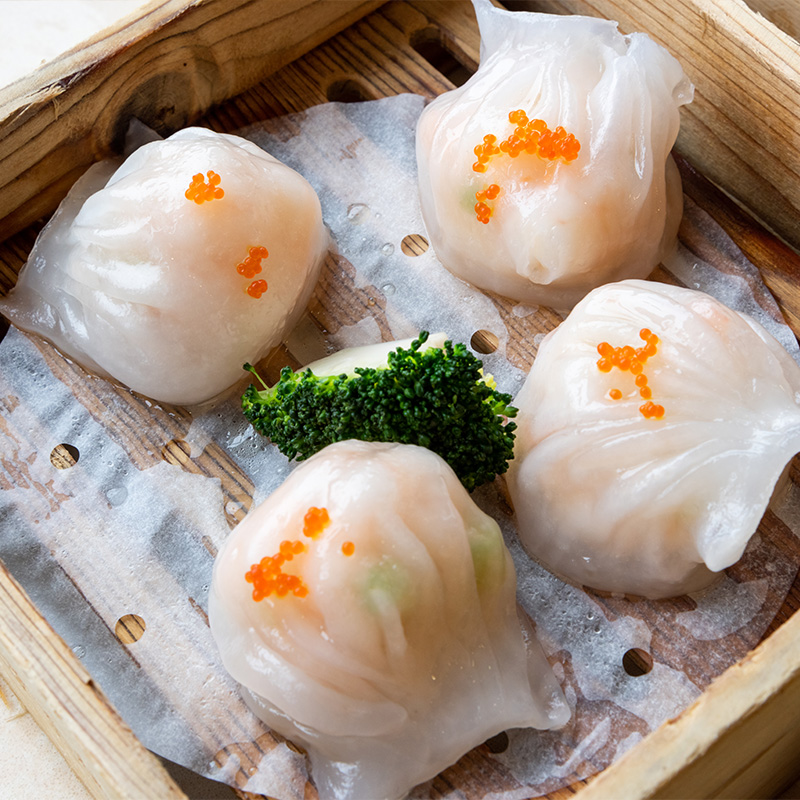
Product Features: 1. Virgin wood pulp 2. Double sides food grade silicone treated 3. Fluorine-free 4. Non-stick 5. Steamer/air fryer basket safe 6. Reusable 7. BPA free 8...
See Details -
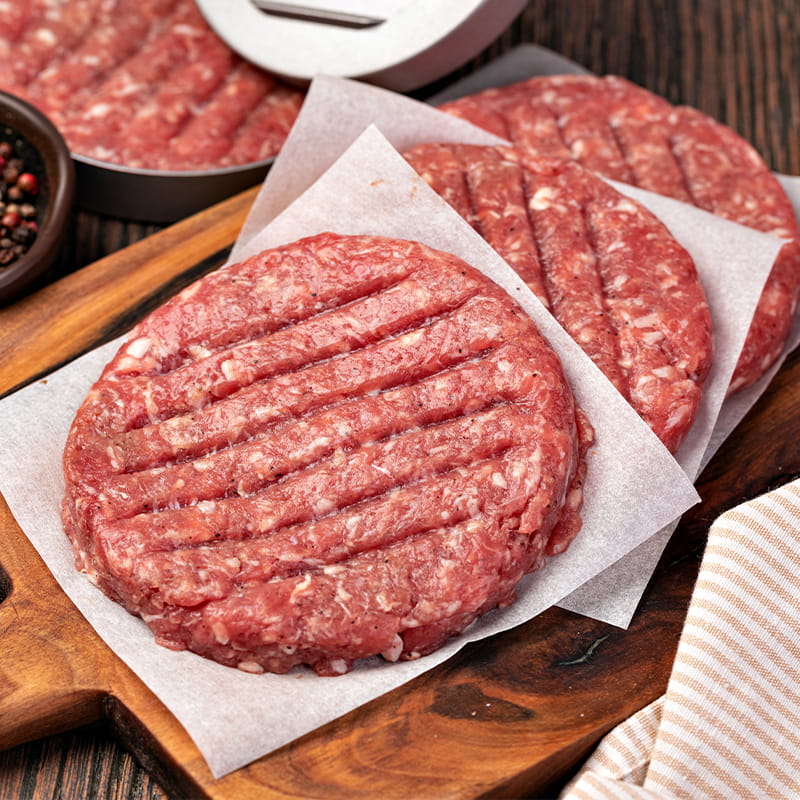
Product Features: 1. Virgin wood pulp 2. Double sides food grade silicone treated 3. Fluorine-free 4. Non-stick 5. Easy to separate 6. Reusable 7. BPA free 8. Biodegradab...
See Details -
Product Features 1. Virgin wood pulp 2. Flexographic printing 3. Eco-friendly water-based ink 4. BPA free Product Details: Introducing our premium Greaseproof Sandwich Paper Sheets, a...
See Details

Professional Baking Parchment Paper Manufacturer in China with more than 15 years silicone coating experience.
Products
Contact Us
- No.10 Longyin Road, Chengnan Industrial Park,Longyou, Quzhou, China.
- +86-18968091013 / +86-571-88639705
- Avayao-1990@hotmail.com
Copyright © Zhejiang Guanghe New Materials Co., Ltd. All Rights Reserved.
Parchment Paper & Baking Paper Sheets Manufacturer
